Categories
Book review

Prince of Thorns

The Broken Empire, #1

by Mark Lawrence

This is a book that I can imagine some people really aren’t going to like at the start: the protagonist, Jorg Ancrath, seems to be more than usually disturbed young man – sociopathic is the word that sprang to my mind.

But as you read on, and as the complexity of his background is uncovered, his behaviour becomes explicable, and one begins to understand more. Eventually, one can perhaps begin to move from understanding to empathy. You learn what he has seen and how he felt – the death, the brutality, the guilt. Together with the environment he grew up in, how else could he have survived? And indeed, in due course, the layers of the true motivation of his actions begin to appear.

Jorg is still a bit of a sociopath, though. Here he is on the game of life:

“You can only win the game when you understand that it is a game. Let a man play chess, and tell him that every pawn is his friend. Let him think both bishops holy. Let him remember happy days in the shadows of his castles. Let him love his queen. Watch him lose them all.”

In this view of life as a game without rules, and a game to be won, you find the key to his character:

“Anything that you cannot sacrifice pins you. Makes you predictable, makes you weak.”

Which gives you Jorg’s philosophy on how to play – you push, you cheat, you stab them in the back, but you never, ever, stop:

“In the end it’s about staying power. They should put that on headstones, ‘Got tired’, maybe not tired of life, but at least too tired to hold on to it.”

The world in which the book is set is also an important element here. Jorg is – or at least was – the heir to the throne of one of many competing kingdoms. War is everywhere, and has always been. Again, expectations are confounded, and we gradually learn more about the history of the world, just as we do about Jorg’s personal history. It’s a world like our own medieval times, with some limited magic thrown in. Although, like Jorg, there’s a backstory which you slowly learn, and which tells you more.

Finally, we see hints of a strange politics in this world. Jorg’s ambition is to regain his throne and end the hundred years of war. But is that his ambition, or is he a pawn in a larger and more sophisticated game? Lots for me to look forward to in the rest of the trilogy!

Four stars here. Excellent writing, intriguing world building, and a nuanced main character.
Categories
Book review

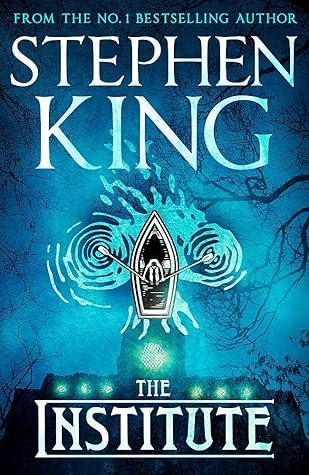
The Institute

by Stephen King

49919128. sx318 sy475

Much to like about this Stephen King, I thought. The first forty or so pages set up the story of Tim Jamieson, an ex-cop who decides on the spur of the moment not to fly from Tampa to New York, but instead to hitchhike. He wends his way along, and ends up at the town of DuPray, North Carolina, where he spots an ad for a “night knocker” – someone to work as an adjunct to the local sherrif’s department, walking the streets at night. Again, he decides more or less on the spur of the moment to pause his cross-country journey, and takes up the job.

Then the story suddenly shifts to Luke Ellis, a genius-level twelve year old boy in Minneapolis. He appears to have a small telekinetic ability – when he’s excited, small objects might unexpectedly rattle about or fall over. He has loving parents, and a great deal to look forward to – MIT have offered him a scholarship already.

Then, suddenly, he is kidnapped, and his parents are murdered, by a well-trained and ruthless team. He wakes up in a room that appears similar, but not quite identical, to his own bedroom. And now he’s inside The Institute, in rural Maine, with a handful of other children who also have psychic gifts – some are”TK”, telekinetic like Luke, others are “TP” and can read surface thoughts. He soon learns that after a few weeks of tests, the children disappear into the Back Half of the Institute, and are never seen again.

The tests they undergo range from the mild to the brutal, but it’s the adults in charge that are in many ways most horrifying. That’s at the heart of the book for me: the moral corruption of the adults who run the Institute, inured to what they are doing to the children for “the greater good”. The children are just children – some compliant, one or two defiant, all scared and trying to hide it. The adults are the horrors. There are several references to Nazi experiments on prisoners, and many of these adults are cast in the same light: some believe in some absolute “truth” that justifies whatever they need to do, while others are by nature, or perhaps simply through long exposure, sadistic and brutal.

Uncomfortable reading at times, but largely well done by Mr King. For me the very last chapter was superfluous – the story could have ended 10 pages earlier, and would have been better for it, so I knock a third of a star off for that. But the preceding 500+ pages were good to great – the second half in particular really gripped me and I found it hard to put down. Three and two thirds of a star, rounded up to four.

Categories
Book review

We Are Legion (We Are Bob)

By Dennis E. Taylor

32109569. sy475

I stumbled across this online, where it is referred to as the first Bobiverse book – so called because the main character, Bob Johansson, appears in it in many guises…

…And thus the plot is set. Robert J. is a successful software entrepreneur, who has just sold his software company for multiple millions as we meet him. He decides to spend some of his newly-gotten wealth on a contract that will, in the case of his death, see that his head is preserved, frozen in liquid nitrogen, until such time as it is possible to revive him. As is the way, we soon seen this eventuality arise: Bob is killed in a car accident, and his head is frozen.

When Bob wakes up, more than a hundred years later, he finds that he is now owned by the state, and he is conscripted into an organisation that wants to put him into an interstellar space probe as the controlling system. Not just any probe, but a Von Neumann probe – one that can replicate itself as it finds new stellar systems. Since the state that now owns him is a fundamentalist Christian derivative of the USA, and is on the brink of war with one or the other of the few other superpowers across the globe, this seems like a good option, versus remaining on Earth with a global war potentially about to kick off.

Thus the story is set: Bob launches off onto his adventures as a space ship, with the ability to “clone” himself (although his clones turn out to be more like fraternal twins that identical copies). Of course, things do not go smoothly: at least one of the other superpowers has also launched a probe like his, and they are considerably more aggressive than Bob.

This is a great setup for a very open ended plot, and the whole book is well thought through. The fact that Bob comes from the early 21st century (i.e., now) means that his cultural references are the same as those of the reader. The narration is largely in the first person, and Bob’s ironic-slash-sarcastic voice was nicely done. It’s a science geeky book, too, with puzzles to be worked out and solved using semi-realistic technologies. The overall tone in this reminded me of The Martian in many ways, and I enjoyed it very much. Overall the style was quite bare-bones, without a lot of description of the setting, but lots of science and nerdery, all of which worked very well with the voice of the narrator.

Four stars for me – great fun, and because it wasn’t pretending to be anything it wasn’t. I’ll read the others in due course, I think.

Categories
Uncategorised

Dark Matter

by Blake Crouch

Wherever you are in life, all you have control over is your choices. Did you make the right choices yesterday? Last year? With your first serious partner? That’s what this book cleverly explores. In our youth, all this lies ahead:

“It’s the beautiful thing about youth. There’s a weightlessness that permeates everything because no damning choices have been made, no paths committed to, and the road forking out ahead is pure, unlimited potential.”

Jason Dessen, the hero, is confronted by a masked abductor who asks him “Are you happy in your life?”, forces him to drive to an abandoned warehouse on the outskirts of the city, and knocks him unconscious. When he awakes, he’s strapped to a gurney, surrounded by strangers in hazmat suits. Or at least, they’re strangers to him – but he doesn’t seem to be a stranger to them – they know him, and greet him as a friend.

The Jason who is knocked out is married to a gifted artist, Daniela, whom he married fifteen years before when he found out she was unexpectedly pregnant with his child. Jason gave up his research into quantum mechanics, and took a job as a college physics professor at a quiet university. But in the world he wakes up in, he isn’t married to Daniela, he has no son. In this world, he’s a celebrated genius, who has achieved something truly remarkable, and held in awe by those around him.

I found the premise for the book dragged me right into it. The choices we make define us, but are there other versions of “us” who made different choices? How did those turn out? Better, or worse? The book picks this theme and runs with it flat out, leading to a thoughtful, complex, thriller, which explores the topics brilliantly. It’s also a great exploration of quantum mechanics, and some of the implications thereof. QM is weird – very, very, weird:

“We all live day to day completely oblivious to the fact that we’re a part of a much larger and stranger reality than we can possibly imagine.”

But somehow we cope with this. Is that a flaw in the theories of QM, which make predictions that – quite literally – are accurate to thirteen decimal places? Or is something else going on:

What if we actually inhabit the multiverse, but our brains have evolved in such a way as to equip us with a firewall that limits what we perceive to a single universe? One worldline. The one we choose, moment to moment.

The pace never lets up, and the conclusion is brilliant, and entirely logical. Four stars, well deserved.

Categories
Uncategorised

Central Station

by Lavie Tidhar

Central Station by Lavie Tidhar
Categories
Book review

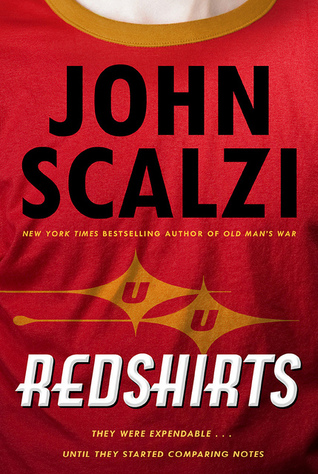
Redshirts

by John Scalzi

Redshirts

Everyone who has ever watched more than a couple of episodes of the classic Star Trek will have noticed that when you’re beaming down to a new planet, you don’t want to be one of the team in red shirts. Those are the ones who end up shot, eaten, crushed, or otherwise killed by whatever this episode’s planet has in store.

Upon this premise does Scalzi found this charming book. The “red shirts” are real people, too, and in this alternate world, some of them begin to realise their fate.

“Yes, death by away team. Very effective on this ship,” Jenkins said.

Ensign Andrew Dahl has just been assigned to this ship. It’s a prestige posting, but slowly he begins to see that – other than the ship’s captain, its chief science officer, and one or two other charismatic key personnel, everyone else is at risk. As he shares this with a few close colleagues, they realise, too, that there’s no simple way out of this for them:

“In other words, crew deaths are a feature, not a bug,” Cassaway said, dryly.

Andrew and his compadres therefore expend a great deal of energy in not being the one’s selected for the away missions. Until the friends stumble upon a secret, which gives them – just maybe – a truly improbable way out of this all…

Categories
Book review

Limited Wish

by Mark Lawrence

Limited Wish by Mark  Lawrence

Excellent follow-up to One Word Kill. You should definitely read that first, although if you’ve forgotten a couple of points from it, Mark Lawrence is good enough to put a very brief summary at the start.

This book picks up the action and carries it forwards with great conviction and style. The characters continue to evolve, and they are just as charming, annoying, or threatening as in the first book. As before, one of the main “characters” is the cancer of the main protagonist:

‘The cancer?’ She came right out with it. Most people hesitate when they say the C-word, just a little, as if they still need to convince themselves you don’t get it just by saying it out loud. Like it was one of those demon lords in D&D that are summoned by name. Say Demogorgon too many times and he was pretty much bound to show up, but cancer . . . not so much.

The science is also very thorough, although since we are talking about time travel, it’s not entirely possible to produce all the convincing details! But it’s well done, and includes several interesting points, such as moving things in time – even just by microseconds – causes them to apparently move in space relative to the Earth, as the planet has moved at least some distance through it’s orbit in that time.

I won’t give away any plot – you’ll have to read it! Now I’m looking forward to #3 in the series…


View all my reviews

Categories
Uncategorised

Mind in Motion

How Action Shapes Thought

Mind in Motion by Barbara Tversky

This was a intriguing book in two ways: first, the subject matter was fascinating, which wasn’t a surprise as that’s why I was reading it, but secondly, I found the prose style delightful. I’ll come back to this later: let’s start with the contents.

It’s all about spatial thinking, and how the way space itself – via gestures, and the metaphors we derive from it – shape the very fundamentals of the way we think. Abstract thinking isn’t “abstract” at all – it’s based on spatial metaphors. We don’t think with words inside our head, we think in (abstract) space in there.

From a personal point of view, this really struck a chord. I was a mathematician and then a computer programmer, and still play with both, and in these worlds I almost always find myself thinking spatially about problems, imagining I’m moving this variable or data structure from here to there, or twisting it in some way to change its form or use. Spatial thinking, Barbara Tversky contends, enables us to draw meaning from our bodies and their actions in the world.

One of the excellent things about this book is that it’s all based in experiment. Hundreds of different experiments underpin the picture that is painted herein, with practical applications everywhere from things that are obviously spatial – how to draw better assembly instructions or navigation instructions – through the physically laid out – comic strips – to the abstract – how to come up with a larger variety of original designs.

As I said, I also came to love the prose style of Barbara Tversky. It beautifully combines short sentences, long sentences, simple words, technical jargon, sentence fragments, lists, the whole gamut, in such an elegant and rhythmic way. Here’s a random example, where she’s talking about tree diagrams:

“The enormity of the influence of tree diagrams on the accumulation and dissemination f knowledge has not been fully recognized. Trees, knowledge, brain. By now their uses are uncountable and their visualizations myriad. The Big Bang, phylogenetic trees, corporate trees, occupational trees, decision trees, diagnostic trees, linguistic trees, knowledge trees, probability trees, family trees, the list goes on. And on.”

All in all, a great book. Four and a half stars.

Categories
Book review

Wild Cards

by George R.R. Martin and others

Wild Cards by George R.R. Martin

This is the first book in the “Wild Cards” franchise, which I’d not come across before, despite it now containing (according to the Wikipedia article) 27 books across four different publishers. It’s a set of short stories by various excellently-credentialled science fiction authors, all set in the Wild Cards alternate history, and edited by George R.R. Martin and Melinda Snodgrass.

The set-up to this alternate history is simple: just after World War II, an alien spaceship crashes in the US, and the – very human-like – alien inside demands to meet the President, to mobilise the entire American military to search for another crashed spaceship, which this first alien claims to have been chasing. For inside this other ship is a deadly bioweapon, which if released will have potentially terrible consequences for humans.

And, of course, it does get released: the first of the short stories deals with these events themselves. The bioweapon turns out to be a gas which reacts with human DNA: only 10% of people are affected, and most of them are killed outright. A few, however, have their DNA mutated and acquire either crippling, or superhuman, abilities. Those deformed by the virus become known as Jokers, while those given superhuman abilities are known as Aces.

I was pleasantly surprised by the high overall standard of these stories. Too often I’ve read compilations that were a bit of a curate’s egg – good in parts. These were overall pretty consistently good, with several really hitting home at a very strong level.

The stories are set across the decades from the end of the war to the early 1970s, and contemporary history plays a big role. Initially the Aces are genuine superheros, and we meet a team of four who work at arms-length for the US government to help them with various foreign policy “interventions” in Argentina, China, Cambodia and elsewhere. But all is not always sunny: a couple of the stories dealt with the McCarthy era, where the House Un-American Activities Committee turns its spiteful gaze upon the Aces, and decides they’re not “American” enough, and have possible communist leanings (hey, they worked in China didn’t they?). It’s quite gritty, real-world stuff, and the short story “Witness”, by Walter Jon Williams, was one of my favourite.

I also liked “Transfigurations”, by Victor Milán, which is set in “summer of love”, and wraps around things like the Kent State Shootings, aka the May 4 Massacre, in 1970. These were nicely written stories that did a great job of taking real-life events and using them as a point of leverage for their plot, whilst not diminishing the tremendous impact of the historical events themselves.

Some stories just use the Aces/Joker storyline to come up with interesting characters. “The Sleeper”, by Roger Zelazny, and “Shell Games”, by George R.R. Martin are representative of this, and both showcase great authors doing something a bit different from their normal fare, and doing it very well.

I’ll definitely be looking out for more of these collections in the future. Some of the Aces/Jokers are I’m sure going to make further appearances – the final story, “Comes a Hunter”, by John J Miller, is surely just a teaser for a future visit by The Predator, while the alien visitor himself – Dr Tachyon – is here for the long haul, I’m sure.

The book was first published in 1986, but despite this, it’s aged extremely well. Overall, I’m giving this four stars – very enjoyable.

(Possible trigger warning: some strong sexual content in a couple of the stories. Yes, people had sex even back in the 1980s 🙂 )

Categories
Book review

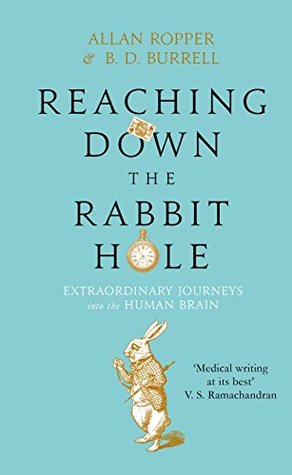
Reaching Down the Rabbit Hole

Extraordinary Journeys into the Human Brain

by Allan H. Ropper

23460726

This is a fascinating behind the scenes peek into the neurology unit at Harvard Medical School, and the work there of Dr. Allan Ropper. It’s about real lives, and it’s all the more poignant for that – from people diagnosed with ALS, to minute brain injuries that cause bizarre behaviours, any number of the extremes that we could each fall into, that are ultimately caused by mis-wirings, mis-firings, or damage to our brains.

At ever turn, Dr. Ropper appears knowledgeable, intuitive, willing to listen, and empathic. These are real people he’s talking to, not anonymous patients, and his care and attention to detail comes across at every turn.

If you liked “The Man Who Mistook His Wife For a Hat”, there are many more such stories in here. But ultimately, for me, it was the humanity that came across – of both the author, and, ultimately, of his patients. We are all a ticking clock of immense complexity, and if dust bunnies stick a cog or two in all of us, the it’s just luck, not our moral right, that means we can still scrape through.