Categories
Book review

Prince of Thorns

The Broken Empire, #1

by Mark Lawrence

This is a book that I can imagine some people really aren’t going to like at the start: the protagonist, Jorg Ancrath, seems to be more than usually disturbed young man – sociopathic is the word that sprang to my mind.

But as you read on, and as the complexity of his background is uncovered, his behaviour becomes explicable, and one begins to understand more. Eventually, one can perhaps begin to move from understanding to empathy. You learn what he has seen and how he felt – the death, the brutality, the guilt. Together with the environment he grew up in, how else could he have survived? And indeed, in due course, the layers of the true motivation of his actions begin to appear.

Jorg is still a bit of a sociopath, though. Here he is on the game of life:

“You can only win the game when you understand that it is a game. Let a man play chess, and tell him that every pawn is his friend. Let him think both bishops holy. Let him remember happy days in the shadows of his castles. Let him love his queen. Watch him lose them all.”

In this view of life as a game without rules, and a game to be won, you find the key to his character:

“Anything that you cannot sacrifice pins you. Makes you predictable, makes you weak.”

Which gives you Jorg’s philosophy on how to play – you push, you cheat, you stab them in the back, but you never, ever, stop:

“In the end it’s about staying power. They should put that on headstones, ‘Got tired’, maybe not tired of life, but at least too tired to hold on to it.”

The world in which the book is set is also an important element here. Jorg is – or at least was – the heir to the throne of one of many competing kingdoms. War is everywhere, and has always been. Again, expectations are confounded, and we gradually learn more about the history of the world, just as we do about Jorg’s personal history. It’s a world like our own medieval times, with some limited magic thrown in. Although, like Jorg, there’s a backstory which you slowly learn, and which tells you more.

Finally, we see hints of a strange politics in this world. Jorg’s ambition is to regain his throne and end the hundred years of war. But is that his ambition, or is he a pawn in a larger and more sophisticated game? Lots for me to look forward to in the rest of the trilogy!

Four stars here. Excellent writing, intriguing world building, and a nuanced main character.

Categories
Book review

The Four Agreements

A Practical Guide to Personal Freedom

by Miguel Ruiz

The Four Agreements by Miguel Ruiz

Some useful advice, buried under many layers of mysticism. So yes, the principles of the Four Agreements are sound psychological advice. They are: Be Impeccable With Your Word, Don’t Take Anything Personally, Don’t Make Assumptions, and Always Do Your Best, and all four are indeed excellent advice in general terms.

But no, the trappings in which it was wrapped did not work for me. Although it’s possible that the wisdom of the Toltec culture survives, the reality is they were a mesoamerican culture that died out nearly a thousand years ago and left no written records, although they certainly left some impressively large stepped pyramids. My conclusion: directionally interesting, but the terrain over which one traveled wasn’t helpful. Two stars, regardless of how much Opra loves it, because it’s recycled and wrapped in too much mystic claptrap.

Categories
Book review

The Honour of the Knights

by Stephen J. Sweeney

The Honour of the Knights by Stephen J. Sweeney

The plot of this science fiction novel has a lot of potential: a group of elite pilots are training in the latest star fighters, to do battle with an implacable enemy, and they slowly begin to think that all is not quite what it seems in the ongoing war.

Sadly, I found the writing style quite weak. For me, it was clunky with little flow to it, and too much dependence on telling a number of details, rather than letting me intuit it. It also has a whiff of thesaurus about it at times:

“Simon took a look at his bedside clock. The illuminated green numbers informed him that it was just past four thirty”.

Really, the numbers informed him, did they? So no points for style, a couple of points for a reasonable plot.

I wanted to like this book, I really did, and I hate writing a review like this for a number of reasons. But I also know I would want to be able to read reviews like this for books I might be about to buy. So, sorry, but only two stars here.

Categories
Book review

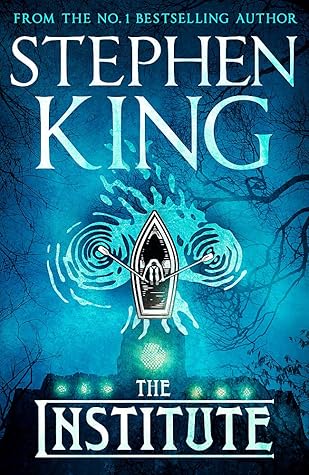
The Institute

by Stephen King

49919128. sx318 sy475

Much to like about this Stephen King, I thought. The first forty or so pages set up the story of Tim Jamieson, an ex-cop who decides on the spur of the moment not to fly from Tampa to New York, but instead to hitchhike. He wends his way along, and ends up at the town of DuPray, North Carolina, where he spots an ad for a “night knocker” – someone to work as an adjunct to the local sherrif’s department, walking the streets at night. Again, he decides more or less on the spur of the moment to pause his cross-country journey, and takes up the job.

Then the story suddenly shifts to Luke Ellis, a genius-level twelve year old boy in Minneapolis. He appears to have a small telekinetic ability – when he’s excited, small objects might unexpectedly rattle about or fall over. He has loving parents, and a great deal to look forward to – MIT have offered him a scholarship already.

Then, suddenly, he is kidnapped, and his parents are murdered, by a well-trained and ruthless team. He wakes up in a room that appears similar, but not quite identical, to his own bedroom. And now he’s inside The Institute, in rural Maine, with a handful of other children who also have psychic gifts – some are”TK”, telekinetic like Luke, others are “TP” and can read surface thoughts. He soon learns that after a few weeks of tests, the children disappear into the Back Half of the Institute, and are never seen again.

The tests they undergo range from the mild to the brutal, but it’s the adults in charge that are in many ways most horrifying. That’s at the heart of the book for me: the moral corruption of the adults who run the Institute, inured to what they are doing to the children for “the greater good”. The children are just children – some compliant, one or two defiant, all scared and trying to hide it. The adults are the horrors. There are several references to Nazi experiments on prisoners, and many of these adults are cast in the same light: some believe in some absolute “truth” that justifies whatever they need to do, while others are by nature, or perhaps simply through long exposure, sadistic and brutal.

Uncomfortable reading at times, but largely well done by Mr King. For me the very last chapter was superfluous – the story could have ended 10 pages earlier, and would have been better for it, so I knock a third of a star off for that. But the preceding 500+ pages were good to great – the second half in particular really gripped me and I found it hard to put down. Three and two thirds of a star, rounded up to four.

Categories
Book review

We Are Legion (We Are Bob)

By Dennis E. Taylor

32109569. sy475

I stumbled across this online, where it is referred to as the first Bobiverse book – so called because the main character, Bob Johansson, appears in it in many guises…

…And thus the plot is set. Robert J. is a successful software entrepreneur, who has just sold his software company for multiple millions as we meet him. He decides to spend some of his newly-gotten wealth on a contract that will, in the case of his death, see that his head is preserved, frozen in liquid nitrogen, until such time as it is possible to revive him. As is the way, we soon seen this eventuality arise: Bob is killed in a car accident, and his head is frozen.

When Bob wakes up, more than a hundred years later, he finds that he is now owned by the state, and he is conscripted into an organisation that wants to put him into an interstellar space probe as the controlling system. Not just any probe, but a Von Neumann probe – one that can replicate itself as it finds new stellar systems. Since the state that now owns him is a fundamentalist Christian derivative of the USA, and is on the brink of war with one or the other of the few other superpowers across the globe, this seems like a good option, versus remaining on Earth with a global war potentially about to kick off.

Thus the story is set: Bob launches off onto his adventures as a space ship, with the ability to “clone” himself (although his clones turn out to be more like fraternal twins that identical copies). Of course, things do not go smoothly: at least one of the other superpowers has also launched a probe like his, and they are considerably more aggressive than Bob.

This is a great setup for a very open ended plot, and the whole book is well thought through. The fact that Bob comes from the early 21st century (i.e., now) means that his cultural references are the same as those of the reader. The narration is largely in the first person, and Bob’s ironic-slash-sarcastic voice was nicely done. It’s a science geeky book, too, with puzzles to be worked out and solved using semi-realistic technologies. The overall tone in this reminded me of The Martian in many ways, and I enjoyed it very much. Overall the style was quite bare-bones, without a lot of description of the setting, but lots of science and nerdery, all of which worked very well with the voice of the narrator.

Four stars for me – great fun, and because it wasn’t pretending to be anything it wasn’t. I’ll read the others in due course, I think.

Categories
Book review

Grey Sister

by Mark Lawrence

Grey Sister by Mark  Lawrence

The second of Mark Lawrence’s Book of the Ancestor trilogy was another great read for me. Nona, our hero from the first book, is now two years further in to her training at the Convent of Sweet Mercy. In this volume, though, we get to see more of the world in which the Convent is set, and more of the politics that plays itself out through the empire which surrounds it. In particular, there’s more politics in this book – in a good way.

Every law of church or state seeks to separate you from your anger. Every rule is there to tame you – to take from your hands that which you should own. Every stricture aims to place the vengeance that is yours in the grasp of courts, juries, justice and judges. Books of law look to replace what you know to be right with lines of ink. Prisons and executioners stand only to keep your hands from the blood of those who have wronged you. Every part of it exists to put time and distance between deed and consequence. To lift us from our animal nature, to cage and tame the beast.


The physical world itself is a masterful creation by the author, and a great backdrop in the series. In this volume, it comes into the foreground, too. Huge mountains of ice press in on a narrow corridor around the equator, kept clear only by the nightly heat from the focus moon. We see a few more hints of how people came to be on this world, and we get to see some more of the world itself.

We find out more about some of the characters who were introduced in the first book, such as Zole, the “Chosen One”. I really enjoyed her mask of frostiness, from behind which the odd glimpse of humour would sometimes sneak:

‘How did you follow me without my noticing?’ ‘Carefully.’ Zole looked up, pocketing a few coins. ‘Do not feel too bad about it. I am the Chosen One, after all.’ Although there was no hint of a smile Nona suspected that she might have witnessed Zole’s first joke.

Nona herself is still key to the action, and she’s joined by her friends as she has to fight assassins, intrigue, and her own demons to survive. Friendship is a constant theme – the bonds formed by it, and their value. And there’s plenty of action, too: the last third of the book is one long relentless chase, and the twists and turns certainly kept me reading into the night.

Nona let Keot take her tongue, her voice becoming a snarl, something alien. ‘I hunger for their deaths. I want their blood to spill. I’ve been trapped, boxed, poisoned, abused, and now it’s my turn. I don’t fear destruction. It’s the desire to survive that slows you, girl. I—’ Nona wrested control back from Keot, coughed and added in her normal voice, ‘if that’s all right with you?’ Clera, pale now, backed against the tunnel wall, her eyebrows raised, and offered her palms in the ‘be my guest’ gesture.

Overall, four and a half stars, rounded up to five for the action in the final chapters. Great stuff, and I can’t wait to read the last one!

Categories
Book review

The Case Against Reality

How Evolution Hid the Truth from Our Eyes

by Donald D. Hoffman

The Case Against Reality by Donald D. Hoffman

There’s a lot to like in Donald Hoffman’s book. He carefully marshals a number of strands of experimental and mathematical evidence to lend weight to his claim that, ultimately, it is extremely implausible that our experience of reality in any way corresponds to how reality actually is. This is a very bold claim, and I found the thought experiment of thinking this through to be very interesting, even if ultimately I was unconvinced by the core argument.

Hoffman has spent his professional career thinking about this problem, and he’s build a very interesting view based upon it. He doesn’t deny the existence of a shared “consensual” reality – that you see what looks to you like a chair and a table, and I see the same. Instead, he denies that the chair and table exist in anything like the form we think they exist in – as three dimensional medium-sized objects. Indeed, he denies they exist at all when we’re not looking at them. Instead, our perception of them causes them to appear in our “user interface” for the world.

One of his most powerful metaphors is this “interface theory of perception”. This says that our experience of reality is rather like the graphical user interface of a computer: the rectangular object on the screen which we click on to open a file isn’t, actually, anything at all like the file really is in the computer – where it exists as a series of variations in charge or magnetic field on a solid state or spinning disk, and what looks like a file opening on the desktop is actually the cumulative action of millions of transistor state changes.

To convince us that what we think of as the world really is not at all what we think it is, Hoffman brings in a number of pieces of evidence. He spends a fair amount of time on our visual system. Here he brings together a number of visual illusions to show quite the depth of processing – with a corresponding opportunity for errors – that happens between photons striking our retina, and our perception of a chair, or a colour, or a beautiful person. This is entirely convincing to me: it’s clear that a vast amount of detail of what we might perceive is both hidden from us, and also filled in by informed guesswork by various networks in our brain.

Hoffman also points to modern physics, where quantum mechanics really does tell us some apparently strange things are happening out there. Photons from distant galaxies, millions of years in transit to us, apparently have their entire history affected by actions we take now. I feel there are other stories that we might tell about all this – from Everett’s multi-world hypothesis on upwards. Hoffman doesn’t dwell on these, but instead uses them as another explosion under our foundational belief that the world is what it looks like.

Hoffman also has some mathematics behind all of this. He has a model of consciousness – as a set of Markovian kernels (basically, things that choose amongst outcomes with different probabilities). And he also has what he calls the “Fitness Beats Truth” theorem. In this he pits mathematical creatures which prefer “fitness” against those which prefer “truth”. Given such a construction, in the framework of the game theory he uses, it’s no wonder that the creatures which prefer fitness tend to out-compete those which prefer truth: he defines fitness as the most important thing in his framework, so of course such creatures win. For me, this doesn’t really answer the question of why, in the real world, fitness wouldn’t more or less track truth. Isn’t a creature which depends on features of the landscape as they actually exist – i.e., a creature for whom fitness broadly corresponds to the state of the world – out-evolve a creature whose fitness was ultimately a fantasy? That’s why we haven’t all become addicted to the chemicals in the world which give us the most pleasure – because ultimately, fitness needs to track back to useful features of the world, rather than the ecstasy of a drug.

Despite my reservations, I did enjoy the book, and the arguments I had with it. I’d give it three and a half stars, rounded down to three for fighting too many paper tigers, rather than steel-man arguments against his position.

Categories
Book review

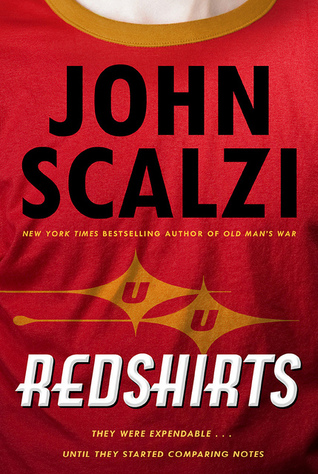
Redshirts

by John Scalzi

Redshirts

Everyone who has ever watched more than a couple of episodes of the classic Star Trek will have noticed that when you’re beaming down to a new planet, you don’t want to be one of the team in red shirts. Those are the ones who end up shot, eaten, crushed, or otherwise killed by whatever this episode’s planet has in store.

Upon this premise does Scalzi found this charming book. The “red shirts” are real people, too, and in this alternate world, some of them begin to realise their fate.

“Yes, death by away team. Very effective on this ship,” Jenkins said.

Ensign Andrew Dahl has just been assigned to this ship. It’s a prestige posting, but slowly he begins to see that – other than the ship’s captain, its chief science officer, and one or two other charismatic key personnel, everyone else is at risk. As he shares this with a few close colleagues, they realise, too, that there’s no simple way out of this for them:

“In other words, crew deaths are a feature, not a bug,” Cassaway said, dryly.

Andrew and his compadres therefore expend a great deal of energy in not being the one’s selected for the away missions. Until the friends stumble upon a secret, which gives them – just maybe – a truly improbable way out of this all…

Categories
Book review

On Human Nature

by Edward O. Wilson

On Human Nature by Edward O. Wilson

A really important and profound book on how we’re a social species, and that although our overall nature is significantly shaped by environment (mostly culture), the set of possible shapes that our nature might take is still profoundly constrained by our genetics. We are not a blank slate at all, despite what some sociologists might claim. Instead, we can:

“hope to decide more judiciously which of the elements of human nature to cultivate and which to subvert, which to take open pleasure with and which to handle with care. We will not, however, eliminate the hard biological substructure until such time, many years from now, when our descendants may learn to change the genes themselves.”

To investigate the limits of genetics, and the flexibility of the human responses to it, Wilson looks at four of the “elemental categories of behavior”: aggression, sex, altruism, and religion.

On aggression, for example, Wilson leaves no doubt that our genetics are those of an aggressive primate, while our culture has striven to remove most of it from our societies.

“Throughout history, warfare, representing only the most organized technique of aggression, has been endemic to every form of society, from hunter-gatherer bands to industrial states … Virtually all societies have invented elaborate sanctions against rape, extortion, and murder, while regulating their daily commerce through complex customs and laws designed to minimize the subtler but inevitable forms of conflict. Most significantly of all, the human forms of aggressive behavior are species-specific: although basically primate in form, they contain features that distinguish them from aggression in all other species.”

In response to those who point to the tiny minority of societies that appear to be pacific, Wilson asks us to look at even their history.

“Among contemporary !Kung San, violence in adults is almost unknown … But as recently as fifty years ago, when these Bushman populations were denser and less rigidly controlled by the central government, their homicide rate per capita equaled that of Detroit and Houston”

None of this is to deny our ability to overcome our genetic tendencies. But first we must recognize that they exist, and the patterns through which they show up in our societies.

“Our brains do appear to be programmed to the following extent: we are inclined to partition other people into friends and aliens … We tend to fear deeply the actions of strangers and to solve conflict by aggression …. (These) learning rules of violent aggression are largely obsolete. We are no longer hunter-gatherer who settle disputes with spears, arrows, and stone axes. But to acknowledge the obsolescence of the rules is not to banish them …. We must consciously undertake those difficult and rarely traveled pathways in psychological development that lead to master over and reduction of the profound human tendency to learn violence.”

This same style of treatment is given to the other topics. For sex, for example, we start with why there are genders at all – and why two of them, versus the thousands of genders in some fungi, or the haplodiploid arrangement of some bees, wasps and ants. From there, we look at what sexual differences seem to genetically exist in humans, and why they might have evolved. His treatment of homosexuality is very sympathetic for the time it was written (1978), and is generally directed towards potential kin-selection benefits of a predisposition to homosexuality, which is perhaps a little dated, but not too far away from my understanding of contemporary views.

Perhaps only in the final chapter, entitled Hope, do I find myself disappointed. Not with Wilson, but with humankind. Wilson’s view is that a correct application of evolutionary theory would uphold three core values: the nobility of the individual (benefiting humankind over their own individual genes), diversity in the gene pool (to allow enough room for human brilliance across any field to emerge), and universal human rights (because power is fluid in our societies in the long term, and any long-term inequity will be visibly dangerous to its temporary beneficiaries). Perhaps he is right, and we’re just not there yet!

Wilson writes all this in 1978; I read a copy of the 25th anniversary edition from the early 2000s, but the subject matter is still just as important today. And very little of it is dated. 4.75 stars, rounded up to 5 for brilliance of exposition.

Categories
Book review

Limited Wish

by Mark Lawrence

Limited Wish by Mark  Lawrence

Excellent follow-up to One Word Kill. You should definitely read that first, although if you’ve forgotten a couple of points from it, Mark Lawrence is good enough to put a very brief summary at the start.

This book picks up the action and carries it forwards with great conviction and style. The characters continue to evolve, and they are just as charming, annoying, or threatening as in the first book. As before, one of the main “characters” is the cancer of the main protagonist:

‘The cancer?’ She came right out with it. Most people hesitate when they say the C-word, just a little, as if they still need to convince themselves you don’t get it just by saying it out loud. Like it was one of those demon lords in D&D that are summoned by name. Say Demogorgon too many times and he was pretty much bound to show up, but cancer . . . not so much.

The science is also very thorough, although since we are talking about time travel, it’s not entirely possible to produce all the convincing details! But it’s well done, and includes several interesting points, such as moving things in time – even just by microseconds – causes them to apparently move in space relative to the Earth, as the planet has moved at least some distance through it’s orbit in that time.

I won’t give away any plot – you’ll have to read it! Now I’m looking forward to #3 in the series…


View all my reviews