Categories
Book review

The Information: A History, a Theory, a Flood

The Information: A History, a Theory, a Flood
Read date: Jan 2019

The Information: A History, a Theory, a Flood by James Gleick
My rating: 5 of 5 stars

Loved this book. This contained everything I could ask for in popular science: a very engaging prose style and a bunch of interesting new material about topics that I love, all woven into a compelling narrative across a very broad canvas illustrated in depth with characterful anecdotes and curious asides. Even topics where I thought I was already well-informed were brought into a new light.

Gleick starts with the earliest forms of non-verbal communication – how writing evolved, and how that may in itself have catalyzed changes in the way humans actually think. He discusses communication over distances by a great discussion of talking drums, and that alone was practically worth the price of admission. I had no idea how they actually worked, and the setup of how they mimic the rising and falling tones of the tonal tribal languages, but need much more florid phrases to disambiguate what they are saying because they have tone alone to work with, was brilliant.

Next, we are introduced to the very first dictionaries, and what an odd thing they are if you’ve never seen one. Alphabetical order, for example, is an alien concept that we just take for granted – just think how pictographic languages might (not) work with that. And which new words deserve to be included? Again, not obvious concepts.

From here we move to the core concepts of numbers, via Charles Babbage and his engines of computation. This was familiar territory to me, but still I found new insights and interest, not insignificantly down to just the sheer depth of the material being presented. Once we have numbers, we get to codes, and from there to how you might code a language – Samuel Morse makes a great appearance here.

Now comes the more mathematical chapters, as Claude Shannon tries to work out what information actually is, driven by the desire of his employers (Bell corporation) to cram more information, in the form of morse, or other, coded language down a noisy channel. This expands into a much broader section that’s effectively about mathematics as a language, which touches on Godel’s incompleteness theorem and builds up towards Maxwell’s demon and how information and energy are in some intriguing mathematical ways directly interchangeable.

I’ve seen all of this before, and what worries me still is that Shannon’s definition of information doesn’t correspond very well to our natural, every-day understanding of information. This means that the mapping back from conclusions drawn from information theory back to our every-day world may give us some warped conclusions. The concept of logical depth, from Charles Bennett, fits this more closely, and gets a brief mention at the end of these chapters, but could have done with more coverage for me.

No modern book about information can avoid touching on Dawkins’ concept of the meme, and Gleick covers this in the concluding chapters. He builds from DNA as a code up to this, and here I might criticise his lack of any discussion of epigenetic effects: we now know that DNA isn’t simply the code for life, but that there are a whole number of other things that affect for example what parts of the genome are expressed, and these often come from outside of the chromosomes themselves. Examples abound, but include the way in which many reptiles will grow out of an egg as one gender or another depending on the temperature of incubation, or how a regular bee will become a queen bee if fed the right chemicals (in the form of royal jelly). None of this was discussed, but it could have been incorporated – the person that reads a text gets different meanings depending on what it understands about the world already, after all.

Overall my criticisms are minor in the face of a great book – five stars for sure, and one to keep for a re-read another day!
View all my reviews

Categories
Book review

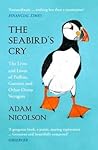
The Seabird’s Cry: The Lives and Loves of Puffins, Gannets and Other Ocean Voyagers

The Seabird’s Cry: The Lives and Loves of Puffins, Gannets and Other Ocean Voyagers
Read date: Jan 2019

The Seabird’s Cry: The Lives and Loves of Puffins, Gannets and Other Ocean Voyagers by Adam Nicolson
My rating: 5 of 5 stars

I found this to be a deeply researched, thoughtful, beautiful insight into the lived experience and ecosystems of ten different species of seabirds. And simultaneously, a heart-wrenching, terrifying, glimpse into the impact of the human world on their breeding and feeding grounds, their populations and their individual lives.

Early on, Adam Nicolson introduces the concept of “umwelt”, created by Joakob von Uexkull after reading Kant and his idea that our minds shape the world we perceive:

The German means ‘surrounding world’, but more largely, as primatologist Frans de Waal has described it, Uexkull had in mind a vision of the animal’s ‘self-centred subjective world, which represents only a small tranche of all available worlds’. Each species lives in its own unique sensory universe, to which we may be partially or wholly blind, and so we must not speak of animal ‘cognition’ or animal ‘intelligence’, but in the plural of ‘cognitions’ and ‘intelligences’. Each animal’s ‘meaning-world’ cannot be understood on any terms except its own.

This concept of umwelt drives the rest of the book. In ten chapters, Nicolson tries to show us the meaning-world of birds from Fulmars to Gannets and Albatrosses. It’s a beautiful, beautiful, book, with an important message. Quite how we individually can help with these large-scale coordination problems is a challenge that besets the modern age, as we drive in our ton-and-a-half of steel’s worth of cars, burning irreplaceable fuels, to trendy cafes where we sip eco-friendly lattes (made with almond milk – using ten times the water of dairy milk to farm – and rare breed coffee, farmed on the former habitat of we-care-not-what animals), congratulating ourselves that we no longer use a plastic straw to sip through. Whatever we are doing, it’s clear it’s too little, and may well be too late.

View all my reviews

Categories
Book review

The Deep-sky Imaging Primer, Second Edition

The Deep-sky Imaging Primer, Second Edition
Read date: Dec 2018

The Deep-sky Imaging Primer, Second Edition by Charles Bracken
My rating: 5 of 5 stars

This is an amazingly comprehensive introduction to using your telescope with either a DSLR camera or a specialist astronomy camera for taking pictures of the night sky – specifically stars, galaxies and nebulae, rather than planets. It gives a thorough grounding on the theory, and follows it up with very helpful walkthroughs of processing the images you have taken with either Photoshop or PixInsight (with much of the advice probably working for other photography packages out there). Although the theory can get quite deep, even with my limited understanding it works pretty well, with each chapter starting with the straightforward stuff, and then diving pretty deep. I found myself skipping a few sections the first time through, and returning to them later when I needed their advice, and when I knew a little more to make them understandable!

I’ve been working my way through it for a few weeks now, and have succeeded in using its advice to produce some quite acceptable (for me!) photos of a few of the familiar objects out there. So I couldn’t be more pleased. Five (very beautifully imaged) stars.

Just to add to this, a couple of years later – I still refer to this book pretty much every time I am processing astrophotography. As PixInsight continues to evolve, I’m sure it will fall a little behind, but it’s holding up very well in 2020, at least.

View all my reviews

Categories
Book review

A Christmas Cornucopia

A Christmas Cornucopia
Read date: Dec 2018

A Christmas Cornucopia by Mark Forsyth
My rating: 5 of 5 stars

It’s hard to be curmudgeonly when reviewing a book that anticipates your potential Christmas grumpiness and cleverly unpicks the threads of what you think of as Christmas, and takes you through their delightful origins. In the end are laid bare not such mysterious matters as the story behind Santa’s reindeer, why we eat so much at Christmas, and when Christmas actually is in the year. The tone is light but scholarly, with some very funny asides and lots of read-out-loud-and-annoy-others moments. An excellent stocking filler (which is also explained therein).

View all my reviews

Categories
Book review

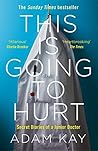
This is Going to Hurt: Secret Diaries of a Junior Doctor

This is Going to Hurt: Secret Diaries of a Junior Doctor
Read date: Nov 2018

This is Going to Hurt: Secret Diaries of a Junior Doctor by Adam Kay
My rating: 5 of 5 stars

A marvelous, personal, engaged, and very funny view from the front lines of our (UK) hospitals, as Adam Kay recounts stories and entries from his “training diaries”, across his years as a junior doctor.

Some of the stories are just plain hilarious, but holding all of it together is the constantly visible thread: junior doctors work amazingly, passionately, sometimes almost literally unbelievably, hard. They relentlessly deliver hundred-plus hour work weeks, across day after day, without a break and often without sleep, missing birthdays, funerals, weddings (sometimes almost their own) to hold together the often creaking, glorious, sometimes Kafka-esque, National Health Service. None of these people work that hard in those circumstances for the money – they do it to save lives, to make a difference every day, in a way I can barely believe, but for which I am eternally grateful.

A friend of ours was woken up at four in the morning a couple of days ago, by an ambulance at her door. Although she had been sick in the night, she hadn’t called them herself: somewhere, sat on an uncomfortable chair using a taped-together computer in a local hospital, a junior doctor on his or her umpteenth hour of consecutive shifts had reviewed her blood results from two days before, had spotted that our friend was about to go into kidney failure, and had pressed the red button. Twenty minutes later, an ambulance crew were hammering on her door to take her in, fully prepared to break it down to get in. We all complain about the NHS – the waiting times, the paperwork, the endless seeming inefficiencies, even about the cost of the car parks. But there it was, unsolicited, in the dark, saving her life. Nye Bevan, we thank you.

View all my reviews

Categories
Book review Uncategorised

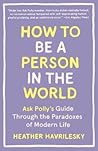
How to Be a Person in the World: Ask Polly’s Guide Through the Paradoxes of Modern Life

How to Be a Person in the World: Ask Polly's Guide Through the Paradoxes of Modern Life
Read date: Nov 2018

How to Be a Person in the World: Ask Polly’s Guide Through the Paradoxes of Modern Life by Heather Havrilesky
My rating: 5 of 5 stars

Well, what a marvelous book this is: a collection of long, wise, sweary, ranty, and very very funny responses from the advice columns of Heather Havrilesky. Never afraid to say to her correspondents “oh yes, I also did that enormously stupid thing for five years in my thirties”, she manages also at the same time to dispense sage words, with enormous kindness and empathy to the person on the other end of the letter.

No matter how you are living your life right now – regardless of how badly or how well you are doing in the game we all have to play through to the end – you will learn something from these pages. One to read, re-read, and then read some more until the pages start to fall out.

View all my reviews

Categories
Book review

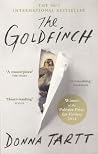
The Goldfinch

The Goldfinch
Read date: Oct 2018

The Goldfinch by Donna Tartt
My rating: 5 of 5 stars

I’ve just finished The Goldfinch, and wow, I’m at a bit of a loss for words. This is an epic book in every sense – the prose is quite extraordinary, with hugely evocative descriptions of a scene or a person, sentences going across many many lines, and then a single phrase that stops you in your tracks, leaving you gazing about as if someone has unexpectedly slapped you across the face with a wet towel. And even though it is 800+ pages, the story is gripping throughout, a real page-turner, as my neglected wife would tell you!

In some ways it’s a book of two halves, with a gap of eight years between them, and if I had a criticism it’s perhaps that the second half was longer than it needed to be. Although the descriptions and paragraphs are still as compelling as the first, perhaps we could have sped up the pace a little at times in that second half. Much more than that, I cannot say, for fear of revealing any of the many twists and turns within. I was reminded on the one hand of Edith Wharton and The House of Mirth, for the detailed and exquisite descriptions, and on the other hand of Cormac McCarthy and Blood Meridian, for the despair and depth written into almost every line.

Regardless of my minor quibble about the second half, this is a book that is going to live large in my imagination. The characters, the colour and vividness of the scenes, all quite astonishing. Even the conclusion is a revelation, throwing the rest of the book into a new light.

And, dear reader, if I could write one sentence as beautifully as Donna Tart writes 841 pages, I think I would die happy.

View all my reviews

Categories
Book review

The Undoing Project: A Friendship that Changed the World

The Undoing Project: A Friendship that Changed the World
Read date: Oct 2018

The Undoing Project: A Friendship that Changed the World by Michael Lewis
My rating: 5 of 5 stars

I loved this story of Amos Tversky and Danny Kahneman’s lives, how their paths crossed and re-crossed, their extraordinary friendship, and their uncovering and unpacking of the way in which we are not the perfect, rational, beings that economists and psychologists once had us believe.

Michael Lewis is a consummate storyteller, and he does a brilliant job of bringing these two characters to life, with all their brilliance as well as their human frailties. One aspect I particularly liked was the interweaving of their lives with the emergence of modern Israel – Tversky was born in Palestine, while Kahneman’s family emigrated there after the war. It feels very much as if the culture and the intellectual climate of the new country was a significant factor in what they were able to accomplish.

This is a story that has not yet ended, even though one of the two leading characters is no longer with us. Others have picked up the torch, and are carrying it forward. The implications of their work are profound and still being explored, yielding so far a couple of Nobel prizes, and some important implications for our understanding of ourselves, how we make decisions, and how we can make them smarter.

View all my reviews

Categories
Book review

God Is Not Great: How Religion Poisons Everything

Read date: Sept 2018

Rating: 5 star

It is hard to imagine a more comprehensive and trenchant criticism of the results of the religious impulse in humankind. Across almost every time and place, the results of religion are show to be, at best, no better than those of secularism, and in many cases, somewhere between slightly worse and inhumanly bad. It doesn’t matter if you’re talking about the monotheistic religions of Muslims, Christians and Jews, or the eastern mysticisms of Buddhism. These things aren’t just in our long ago history, either: Hitchens never lived to see the systematic oppression, arguably genocide, of the Rohingya people by the Buddhists of Myanmar, and he only saw the beginnings of the escalating series of revelations about the abuses inside the Catholic church. It’s not hard to imagine what he would have made of them – it’s often bad, altogether too much of the time. But Hitchens is not blind in his disbelief: he acknowledges many individuals of faith who have achieved and contributed greatly to their fellow humans. But overall, the balance in not in their favour.

Some might argue that faith shows us what the good life really is, even if we are not believers. However, as he shows in several chapters, this is a logical confusion: what kind of “good person” would you be if you were only being good out of fear of hellfire after death? How much better to be a good person simply because it’s the kindest, best, or just the right, way of being in the world. We don’t need the divine as a benchmark of fairness, we all have one – all the primates, and many other mammals, already have one.

I didn’t start this book as a believer, but it’s hard to imagine that someone who lived with faith in the divine would survive the contact with Hitchens and his writings with their faith entirely unscathed.

Categories
Book review

The Complete Little World of Don Camillo

The Complete Little World of Don Camillo
Read date: Sept 2018

The Complete Little World of Don Camillo by Giovannino Guareschi
My rating: 5 of 5 stars

A heap of bite-sized delights!

I hadn’t read any of the individual Don Camillo books, but my wife had read several of them in her youth, and spoke very fondly of them. So I bought this for her birthday, and then read it myself – and they are entirely delightful!

There are logically five books in this collection, covering the period from the early 1950s to the mid-1960s, a period in which Italy steered itself from a broken-down post-war economy to a wild and swinging destination for fashionistas. And these stories focus on Don Camillo, the priest of a small town in the valley of the river Po, and Peppone, the leader of the local communist party.

The stories centre around the ongoing love/hate relationship between Don Camillo and Peppone. Both love their town, but fight madly over what the best path to its success might be. The characters evolve beautifully over the years, and other characters make regular appearances, so you get to know them too. Also important are Don Camillo’s mental conversations with Jesus, who admonishes him when he errs, and tweaks his nose when he gets too big for his boots.

Each individual story is short – 5-10 pages – but charming. Many are built around some aspect of the small town life, and almost all are driven by the political tensions between the communists and religion. Indeed, my favourite set of stories was the “Comrade Don Camillo” book of stories, as Don Camillo inveigles his way onto a sightseeing trip around Soviet Russia, organised by the communist party in Italy.

View all my reviews