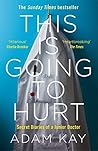
A marvelous, personal, engaged, and very funny view from the front lines of our (UK) hospitals, as Adam Kay recounts stories and entries from his “training diaries”, across his years as a junior doctor.
Some of the stories are just plain hilarious, but holding all of it together is the constantly visible thread: junior doctors work amazingly, passionately, sometimes almost literally unbelievably, hard. They relentlessly deliver hundred-plus hour work weeks, across day after day, without a break and often without sleep, missing birthdays, funerals, weddings (sometimes almost their own) to hold together the often creaking, glorious, sometimes Kafka-esque, National Health Service. None of these people work that hard in those circumstances for the money – they do it to save lives, to make a difference every day, in a way I can barely believe, but for which I am eternally grateful.
A friend of ours was woken up at four in the morning a couple of days ago, by an ambulance at her door. Although she had been sick in the night, she hadn’t called them herself: somewhere, sat on an uncomfortable chair using a taped-together computer in a local hospital, a junior doctor on his or her umpteenth hour of consecutive shifts had reviewed her blood results from two days before, had spotted that our friend was about to go into kidney failure, and had pressed the red button. Twenty minutes later, an ambulance crew were hammering on her door to take her in, fully prepared to break it down to get in. We all complain about the NHS – the waiting times, the paperwork, the endless seeming inefficiencies, even about the cost of the car parks. But there it was, unsolicited, in the dark, saving her life. Nye Bevan, we thank you.
This book is a scream of rage at modern Western society. McGarvey manages to do this while acknowledging that the same society contains the seeds of the solution. He also sees very clearly the processes that create the problems.
Darren McGarvey was brought up on one of the most challenging estates outside Glasgow in the 1990s. Except that “brought up” is an exaggeration – better to say he survived an often personally dangerous childhood with an alcoholic and depressive mother, a father he fell out with, bullying an everyday fact of life, addiction to drugs, alcohol and fast food an everpresent reality. Behind this all, he contends, are the brutal battering from the stresses of extreme poverty.
He’s fairly unflinching in his views of the world – judging all by the standards he came to recognise as reality, from the highest to the low:
“People who are convicted of crimes very rarely think the law has been applied fairly to them. This is as true of serial killers as it is of petty thieves. Most people find it hard to accept even the most banal forms of legal responsibility. Think how indignant drivers get when they receive legitimate parking tickets or speeding fines. Everyone always has a good reason as to why they are the exception to a rule they are being subjected to and it’s very rare that a person holds their hands up and accepts culpability. Most people believe their circumstances are unique and that the rules shouldn’t apply.”
He holds no truck with the press, and their relentless middle-class approach to the world:
“On the day women were legally obliged to provide proof of their rape to claim benefit designed to ease the burden of in-work poverty on their children, the national news was dominated by a family who felt hard done by because they were fined £60 for taking their daughter to Florida. I’m not saying both parties do not have the right to feel equally aggrieved at their respective circumstances, but surely one deserves more prominence than the other in the public mind?”
or:
“Being underclass is to sit, day after day, and scroll through a news feed full of Guardian articles that are confirming things you knew were the case 20 years prior. ‘Study finds children living in dysfunction can’t learn’, ‘Experts say sugar is addictive’ or, my personal favourite, ‘Survey discovers the arts is dominated by middle class people’.”
His tough mindedness and his honesty are sometimes challenging, but I think he would say he doesn’t care – he’s trying to get a message across, and he does what he needs to do in order to ensure it sticks. Each chapter is part of a thread, telling a story to deliver his message. It certainly changed my views on what the lived experience is like today in Britain for many people:
“Much like the school curriculum, where your value is derived not only from your ability to think and reason but also from your willingness to submit to a process, the conversation about decision-making in your own community follows a similar pattern. You must engage within the parameters set by the people who are really in charge.”
I also came away better informed on the complexities and difficulties that lie behind the simplistic phrases and glib generalisations of those in the “poverty industry”, who often tacitly need the problems to continue to justify their roles and funding. However, McGarvey isn’t afraid also to challenge those in poverty themselves, encouraging them to take personal responsibility – if only because actually there are no “quick wins” coming from politicians or the third sector.
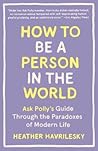
Well, what a marvelous book this is: a collection of long, wise, sweary, ranty, and very very funny responses from the advice columns of Heather Havrilesky. Never afraid to say to her correspondents “oh yes, I also did that enormously stupid thing for five years in my thirties”, she manages also at the same time to dispense sage words, with enormous kindness and empathy to the person on the other end of the letter.
No matter how you are living your life right now – regardless of how badly or how well you are doing in the game we all have to play through to the end – you will learn something from these pages. One to read, re-read, and then read some more until the pages start to fall out.
The slightly sketchy crew of a marginally run-down spacecraft find the floating wreckage of a 500-year old vessel, floating in trans-Neptunian space. It seems to be one of the Goldilocks ships, sent out from Old Earth to likely-looking planetary systems at sub-light speeds, to found new colonies as Old Earth crumbled behind them. Upon further investigation, the ship appears to contain some strange alien technology – as well as one remaining crew member, frozen in suspended animation for 500 years. So, they take on board the tech and the frozen crew member, and investigate both…. what could possibly go wrong??
I loved the style of writing from Tim Pratt – funny and interesting characters, imaginatively conceived, and a neat space-opera setting. Best for me was the witty dialogue between the characters. Hugely entertaining! I’d not come across his writing before, but I will definitely be hunting out more in the near future.
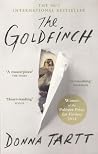
I’ve just finished The Goldfinch, and wow, I’m at a bit of a loss for words. This is an epic book in every sense – the prose is quite extraordinary, with hugely evocative descriptions of a scene or a person, sentences going across many many lines, and then a single phrase that stops you in your tracks, leaving you gazing about as if someone has unexpectedly slapped you across the face with a wet towel. And even though it is 800+ pages, the story is gripping throughout, a real page-turner, as my neglected wife would tell you!
In some ways it’s a book of two halves, with a gap of eight years between them, and if I had a criticism it’s perhaps that the second half was longer than it needed to be. Although the descriptions and paragraphs are still as compelling as the first, perhaps we could have sped up the pace a little at times in that second half. Much more than that, I cannot say, for fear of revealing any of the many twists and turns within. I was reminded on the one hand of Edith Wharton and The House of Mirth, for the detailed and exquisite descriptions, and on the other hand of Cormac McCarthy and Blood Meridian, for the despair and depth written into almost every line.
Regardless of my minor quibble about the second half, this is a book that is going to live large in my imagination. The characters, the colour and vividness of the scenes, all quite astonishing. Even the conclusion is a revelation, throwing the rest of the book into a new light.
And, dear reader, if I could write one sentence as beautifully as Donna Tart writes 841 pages, I think I would die happy.
I loved this story of Amos Tversky and Danny Kahneman’s lives, how their paths crossed and re-crossed, their extraordinary friendship, and their uncovering and unpacking of the way in which we are not the perfect, rational, beings that economists and psychologists once had us believe.
Michael Lewis is a consummate storyteller, and he does a brilliant job of bringing these two characters to life, with all their brilliance as well as their human frailties. One aspect I particularly liked was the interweaving of their lives with the emergence of modern Israel – Tversky was born in Palestine, while Kahneman’s family emigrated there after the war. It feels very much as if the culture and the intellectual climate of the new country was a significant factor in what they were able to accomplish.
This is a story that has not yet ended, even though one of the two leading characters is no longer with us. Others have picked up the torch, and are carrying it forward. The implications of their work are profound and still being explored, yielding so far a couple of Nobel prizes, and some important implications for our understanding of ourselves, how we make decisions, and how we can make them smarter.
This book describes in some detail some of the paths of Dzogchen meditation, one of the traditional variants of Buddhist meditation. I’m an “intermediate” meditator: I’ve been meditating for several years, and have been on one silent retreat, but I’ve definitely still got a long way to go in my practice. In that quest, to improve my practice, I found the book definitely did help. It has a number of practical exercises with a clear progression, and the discussion – in the form of lots of question and answer sessions with the authors.
For me, the path was not complete, though. The initial stages were clear and well guided, but after that the way forward was more or less left as an exercise for the reader. I also found the use of the original Tibetan words for many of the terms to be of mixed value: it was sometimes hard to hold them all in your head, especially as they are used precisely because there are no directly equivalent terms in English, so you are having to hold a whole subtle set of meanings in your head, not just a direct translation.
Ultimately, though, no book about a subject that is so difficult to describe in concrete terms is going to solve your problems for you. It can be a guide book on your journey, and in that regard I found Roaring Silence to be useful, with a lot of the Q&A-style discussion in particular gave you metaphor and allusions which helped in my understanding.
It is hard to imagine a more comprehensive and trenchant criticism of the results of the religious impulse in humankind. Across almost every time and place, the results of religion are show to be, at best, no better than those of secularism, and in many cases, somewhere between slightly worse and inhumanly bad. It doesn’t matter if you’re talking about the monotheistic religions of Muslims, Christians and Jews, or the eastern mysticisms of Buddhism. These things aren’t just in our long ago history, either: Hitchens never lived to see the systematic oppression, arguably genocide, of the Rohingya people by the Buddhists of Myanmar, and he only saw the beginnings of the escalating series of revelations about the abuses inside the Catholic church. It’s not hard to imagine what he would have made of them – it’s often bad, altogether too much of the time. But Hitchens is not blind in his disbelief: he acknowledges many individuals of faith who have achieved and contributed greatly to their fellow humans. But overall, the balance in not in their favour.
Some might argue that faith shows us what the good life really is, even if we are not believers. However, as he shows in several chapters, this is a logical confusion: what kind of “good person” would you be if you were only being good out of fear of hellfire after death? How much better to be a good person simply because it’s the kindest, best, or just the right, way of being in the world. We don’t need the divine as a benchmark of fairness, we all have one – all the primates, and many other mammals, already have one.
I didn’t start this book as a believer, but it’s hard to imagine that someone who lived with faith in the divine would survive the contact with Hitchens and his writings with their faith entirely unscathed.
I hadn’t read any of the individual Don Camillo books, but my wife had read several of them in her youth, and spoke very fondly of them. So I bought this for her birthday, and then read it myself – and they are entirely delightful!
There are logically five books in this collection, covering the period from the early 1950s to the mid-1960s, a period in which Italy steered itself from a broken-down post-war economy to a wild and swinging destination for fashionistas. And these stories focus on Don Camillo, the priest of a small town in the valley of the river Po, and Peppone, the leader of the local communist party.
The stories centre around the ongoing love/hate relationship between Don Camillo and Peppone. Both love their town, but fight madly over what the best path to its success might be. The characters evolve beautifully over the years, and other characters make regular appearances, so you get to know them too. Also important are Don Camillo’s mental conversations with Jesus, who admonishes him when he errs, and tweaks his nose when he gets too big for his boots.
Each individual story is short – 5-10 pages – but charming. Many are built around some aspect of the small town life, and almost all are driven by the political tensions between the communists and religion. Indeed, my favourite set of stories was the “Comrade Don Camillo” book of stories, as Don Camillo inveigles his way onto a sightseeing trip around Soviet Russia, organised by the communist party in Italy.
This is a worthy successor to the first two in the Millennium trilogy, and a gripping conclusion to the various storylines. It took me about 50 pages to get back into the plot and remember what had happened to the main characters, but the author does a good job of leading you through this, building the scaffold around you where the action will unfold. Plot is gripping, as I say, and my wife said when I was still 100 pages from the end that she was looking forward to me finishing, and her getting her husband back!
Tone is similar to the previous two stories, in that the style is slightly dry and stepped back. That works well with Salander’s character, and to a certain extent also with Blomkvist, but less so I felt with some of the more emotionally aware characters such as his sister, and the leading police officers.
Overall – very well done, and even at 750 pages, never a dull moment.