Categories
Book review

Zen Wrapped in Karma Dipped in Chocolate

by Brad Warner

Picked this book up at random in a bookshop, based the cover, the title, and my patented method of opening at a random page about 1/3rd of the way through, reading the page, and seeing if I wanted to continue. I did, and, with some mild caveats, I’d recommend it to you, too.

Brad Warner is a teacher of Zen Buddhism. I practice (and to some small extent, teach) a secular version of Tibetan Buddhism, which is rather frowned upon by some of the Zen Buddhists as being a corruption of the original teachings. But Brad (I’m sure he won’t mind me calling him Brad) ain’t that guy. As well as being a Zen teacher, he is a punk rocker from the 1980s (one of the chapters describes him hanging out backstage at Ozzfest – a giant heavy metal festival), still plays with his band, lived in Japan for 11 years, worked for a movie company, has a bit of a crappy relationship with his wife, and so on. He’s a real person, living his real life, just like the rest of us.

This book is a brave attempt to show a true view of a couple of fairly crappy years in Brad’s particular life, and how he coped with them. The subtitle says it all: “A Trip Through Death, Sex, Divorce, and Spiritual Celebrity”. He does this not by “being all Zen” about it, but by being a real, genuine, fully-engaged, human being.

Ultimately, that’s the message of this book: we’re all genuine, complex, brilliant, screwed-up, happy, sad, flawed, self-contradictory, human beings. He’s no different from the rest of us. He’s just perhaps a little bit more aware of it than some – thanks to his 25 years of practice. In the end, this is what Buddhism tries to show you, I think.

I did enjoy this book, and it’s definitely entertaining enough to be worth your time to read. I was hoping, perhaps, for a little more on the Zen stuff, and a little less of the autobiography, so I’d give it three and a half stars, rounded down to three for lack of core content. Still, I’ll look out for others of his – they sound like a blast!

Categories
Book review

Condensed Chaos

by Phil Hine

7735637

I should confess first of all that this book isn’t really about my kind of thing: I’m a maths/science geek, so a book talking about how to perform real magic, with spirit summoning and so forth, isn’t likely to be my cup of tea. But it was on my wishlist (because of a recommendation by an author I rate) and my thoughtful son bought me a copy for my birthday, so I read it with some curiosity.

And it’s fair to say that even from my somewhat doubting point of view, Phil Hine does a great job here. He explains in a really very straightforward way how one might go about doing some of these magical things, if one wants to do so. He’s very clear that you need to actually DO the things, rather than just read about them in books, and that if/when magic starts to work for you, only then will you truly believe.

A lot of what Hine talks about seems plausibly to act on a psychological level, and I can see how much of this might be useful. You’re reminded that the world is in many ways deeply interconnected, in ways that we don’t always see. You’re told about your power to make small changes that may have large effects – again, undoubtedly true, and the foundation for the mathematical “chaos” theory that Hine references.

You’re also given specific instructions for magical acts – for example how to construct a mental “servitor”, and how to project it forth into the world to do your bidding. You’re reminded that you need to be very specific, otherwise you may get exactly what you ask for, not what you wanted. Given the way I do think minds work, together with the vast set of situations one actually encounters every day if you’re paying attention, I can see how this might seem to work for people, setting your mind up for success, and tuning it to look for the early signs.

Hine says he says that he, too, used to think of magic as simply psychological, until early one morning when he awoke to be confronted by a cloudy grey creature sat on his chest, which he eventually dispelled by “projecting” a pentagram at it with his mind. I haven’t had any such experiences, and even if I had I think I would likely attribute them to a particularly vivid dream, or some other bug in the wetware of my brain. So it seems to me there are many explanations of these things that still conform to conventional physics, without having to resort to creatures from another realm materialising in your bedroom. However, I can say is that the author seems entirely sincere, and so I should at least do him the courtesy of adjusting my prior belief in the reality of magic from “extremely unlikely to be the case” to perhaps a tiny fraction more possible.

Three stars, because it was entertaining and well written, and if you were after something like this, then this would seem to me to be a good book for it.

Categories
Uncategorised

The Etymologicon

by Mark Forsyth

33129924. sy475

A book about words, where they come from, how their use has evolved, and how interconnected they all are. Sounds brilliant? So why only three stars – what’s not to like? Well…. it’s a bit all over the place, albeit by design. Each short section is maybe two or three pages, and covers a few related words, with anecdotes and jokes and origin stories and links to other curiosities.

In the end, it was a bit like being trapped at a party by a very smart person, who was entirely happy to show how smart they were, thirty-two times in a row. Each individual instance was entertaining, just the overall effect did not make a great book. I confess I had to put it beside the loo and read it in brief bursts, to preserve my sanity. Fun, but not quite as much fun as I’d hoped.

Categories
Uncategorised

Surfing Uncertainty: Prediction, Action, and the Embodied Mind

by Andy Clark

25823558. sy475

How do we know what’s going on in the world? How do people come to take action based on that understanding – be it catching a ball, typing a book review, learning long division, or building a hadron collider (of any size)? Andy Clark sets out a compelling story of how all this has been coming together in neurophysiology over the last few years into a model based on a hierarchy of processing elements, from the raw sensations upwards, with feedback from the higher levels back to the lower ones.

This model is called ‘predictive processing’, and if offers a compelling, unified view of how brains seem to work in the world. Crucially, the hierarchies of processing layers in brains don’t just sit there waiting for input, but rather they are always predicting what they expect to see coming up from the lower level, noticing any errors, and passing those errors up to the next level whilst simultaneously passing back down an updated prediction as to what might be going on. This means we actively build and re-build models as we go and as we act, rather than waiting for a complete model to become available and then deciding how to act.

The story told here is compelling, detailed, and fits with our emerging understanding both of the data from animal (including human) experiments and of computational models such as neural networks. It explains all sorts of things like dreams, saccade movements of our eyes, and some of the mechanics of language processing. It’s a great story, and I suspect the truth as we eventually uncover it will be more or less along these lines.

Having said all of which, I didn’t find this an easy book to read. Andy Clark is a Professor of Logic and Metaphysics at Edinburgh University, and even as a sciency person myself, I found his prose style dry and, well, academic. There were a few typos that I spotted, and a bit of a heavier hand with the editing might have helped. My complaints here vary from his desire to make up new words like “surprisal” where we already have perfectly good ones like “surprise”, to mixing between a description of hierarchies as sometimes going from front to back, and sometimes going from low to high – occasionally using both in the same sentence. It meant I could only read a few pages at a time before I lost the thread – although I would say there were helpful summary sections at the beginning and end of each chapter, which helped me keep my grip on things, more or less.

My favourite chapter summary, by the way, was for Chapter 8, The Lazy Predictive Brain, which opened up talking about a famous 1989 paper on robotics called “Fast, Cheap, and Out of Control”. Which always sounds like a fun Saturday night to me! (or perhaps that’s just my brain hierarchy switching from up-down to front-back…)

The book is dense with footnotes and references, which is great if you’re another person in this field, but less useful if you’re a more general reader. So although this was a very interesting book in many ways, and I suspect really really good if you’re in this field, I’m only going to give it 3 1/2 stars for myself, rounded down to three for prose density.

Categories
Book review

The Music Shop

26854212

I was looking forward to this, after the lovelieness from Rachel Joyce that was Harold Fry’s unlikely pilgrimage. It’s a story about music, and love, and how people can fall in love with music they didn’t know they needed to hear. I’ll resist drawing a parallel with the four sections of a symphony, but it’s there if you want it, I’m sure. The incidental characters were I felt in many ways better drawn than the main actors, and the setting of the 1980s small English city was very well done.

In the end, it was a bit of a curate’s egg – good in parts. Loved the beginning, loved the end, I felt a bit lost in the middle. Maybe three and a half stars. And if you aren’t sniffling back the tears at the end, you have no heart.

Categories
Book review

Reasons to Stay Alive

Reasons to Stay Alive
Read date: Jan 2019

Reasons to Stay Alive by Matt Haig
My rating: 3 of 5 stars

Three and a half stars, really. There’s a lot to commend here; a very fluent writer, grappling with finding words to describe the indescribable, his own personal experience of depression and anxiety. It has a lot of very short chapters – most are only a page or two – and the narrative slowly emerges. It’s good in many ways, and clearly well regarded by those who have suffered in this way.

I have to say that personally, I struggled at times with it. It was too choppy, too all over the place in narrative thread. And it never really lived up to the title – the reason to stay alive is that this episode would pass, and you might learn from it. True for acute anxiety and depression, but not for an overall existential angst.

I’m not a particular sufferer, but I know some who are, and I fear this would not be a useful book for them. I feel bad about this, as the book is so heartfelt, but this is what I felt. Sorry mate.

View all my reviews

Categories
Book review

Yukikaze

Yukikaze
Read date: Dec 2018

Yukikaze by Chōhei Kambayashi
My rating: 3 of 5 stars

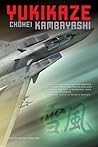
Three and a half stars, really. This book is a bit of a classic, perhaps now showing its age, as it explores the boundaries of what it is to be human by telling the story of the pilot and his increasingly autonomous AI-managed fighter plane, in a war against an unseen alien foe.

Although there were some enjoyable moments, I fear either I missed the point, or the point was so obvious at to be not very interesting (humans – good but flawed; AI – bad but perfect, until it becomes more like a human and discovers the value of flaws).

View all my reviews

Categories
Book review

The Love Song of Miss Queenie Hennessy

The Love Song of Miss Queenie Hennessy (Harold Fry, #2)
Read date: Dec 2018

The Love Song of Miss Queenie Hennessy by Rachel Joyce
My rating: 2 of 5 stars

After the loveliness that was Harold Fry and his adventures, this was always going to be risky: it’s a re-telling of the story from the other end, that of Queenie Hennessy. Sadly, for me, this didn’t quite come off. It felt to me as if the plot was a little too thin, stretched out too far, and at times I found myself speed-reading to get to the next point. It wasn’t bad – the writing is solid, the characters solid if a little one-dimensional at times – but in the end there just wasn’t enough going on to hold my attention. I wanted to like it, and started to read with a lot of goodwill, and that kept me going through. Any remaining, sadly, was blown spectacularly in the last few pages.

View all my reviews

Categories
Book review

Apex (Nexus, #3)

Apex (Nexus, #3)
Read date: May 2018

Apex by Ramez Naam
My rating: 3 of 5 stars

I loved Nexus and I though Crux was good, but I really struggled with this, the third in the trilogy. I felt it took a long time to get going,and in the end it played out 400 pages of plot across 650 pages of book.

View all my reviews

Categories
Book review

The Art of Learning: An Inner Journey to Optimal Performance

The Art of Learning: An Inner Journey to Optimal Performance
Read date: Mar 2018

The Art of Learning: An Inner Journey to Optimal Performance by Josh Waitzkin
My rating: 3 of 5 stars

I really wanted to like this book. It’s a blend of an autobiography and a text on how to think about learning, viewed through the story arc of Josh Waitkzkin’s life. He has clearly lead an extraordinary life, both as a Chess master and as a Tai Chi Chuan champion, and I found the autobiography elements perhaps the more interesting, although they are often surprising un-introspective for someone who clearly is smarter than almost everyone on the planet in some domains, and who spends a lot of time thinking about and analysing and optimising the processes of his own mind.

Ultimately though this is a book about the process of learning, and that’s where I felt a little let down. If you’ve ever heard of “flow”, that state achieved by elite athletes and even us mundanes in particular circumstances, that’s what he’s talking about. He never uses the word flow itself (or not that I spotted), instead approaching it through a series of steps (“slowing down time”, “searching for the zone”, “building your trigger”). These are relayed through personal anecdotes, many of which were certainly interesting to read about. He does add some additional material outside this – I particularly liked the concept of “investing in loss”, and that’s a thought I will definitely carry forward.

In the end, though, I didn’t find the book either uniquely insightful or particularly elegantly written, although of course I acknowledge others may do so. They may write their own reviews, but for me, this approach ultimately didn’t add anything, and by not referring to the existing literature on flow, of which he surely can’t be ignorant, he appears to be rebuilding a path across land that others have already extensively surveyed.

View all my reviews